







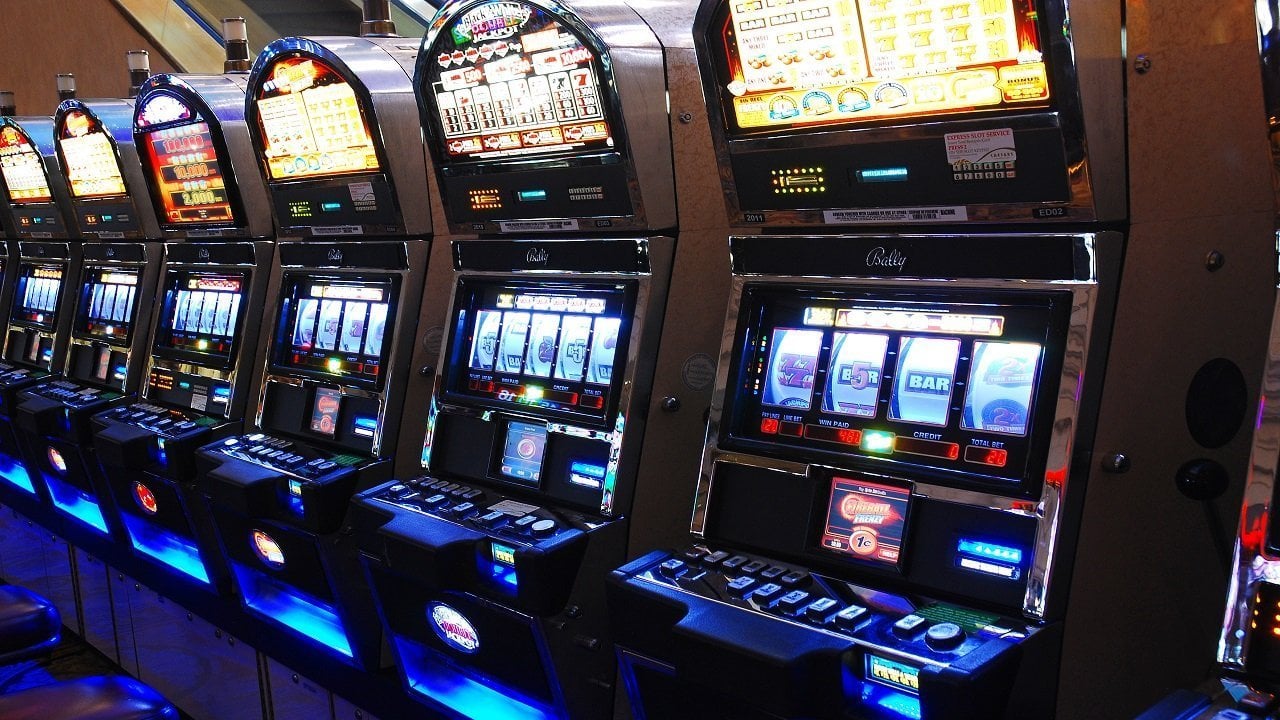
The US congressional Gaming Caucus introduced a bill that aims to increase the sum of slot machine jackpot payout that triggers an IRS report. Legislators want to account for inflation as the jackpot threshold has been unchanged since 1977.
A bipartisan push by members of the congressional gaming caucus is bringing forward a proposal to increase the amount of money needed to be won on a slot machine to trigger an IRS report. The Congressional gaming caucus has finally fronted this agenda after deliberating on it for over one year, and the US gaming sector is welcoming the measure with open arms. It’s worth pointing out that the US Congress had directed the Treasury to look into raising the said limit back in December 2020, but until now, the report hasn’t been released.
The two legislators fronting this potentially historic piece of gambling legislation are Rep Dina Titus (Nevada Democrat) and Guy Reschenthaler (Pennsylvania Republican). It’s easy to understand why Reschenthaler is one of the congresspeople spearheading the matter, seeing that his elected state is home to one of the country’s largest bet markets. That’s not all, though. A handful of legislators behind the duo are playing crucial roles to ensure that the measure, dubbed the SLOT Act, is water-tight and that more of their fellow legislators will follow suit. They include – US Reps. Mark Amodei (Nevada Republican), Steven Horsford (Nevada Democrat), and Anthony Brown (Maryland Democrat).
Endorsement by the American Gaming Association
As we’ve already indicated, the bill is slowly but surely gathering support from many gaming industry stakeholders. But what exactly is this good news that the bill bears? Well, should it successfully pass through the legislative process and the subsequent presidential assent stage, it would mean that the jackpot tax reporting threshold will rise from $1,200 to $5,000. This will certainly be a breakthrough moment given that the $1,200 limit was introduced 45 years ago, in 1977.
The American Gaming Association (AGA) has thrown its weight behind the act because it will be particularly beneficial to casinos that fall under its mandate. For one, the number of slot machines in these casinos that will be temporarily taken out of service to record their tax information will reduce.
Currently, the federal law stipulates that anytime a player wins $1,200 or more, the casino should suspend that slot machine’s operation, and an IRS tax report should be filed right away. As such, after the slot machine is taken offline, casino workers are required to complete a W-25 form. This document is vital as it obliges taxpayers to report their annual gambling winnings as income such that they can be taxed appropriately.
So, if the tax reporting threshold for jackpot payouts is bumped to $5,000, the hassle and paperwork will also be reduced for casino staffers, as it means that fewer jackpot winners get their winnings reported to the IRS. The American Gaming Association got it right when its president Bill Miller said:
Quote“Increasing the slot tax threshold to account for inflation is a long-overdue change that will alleviate unnecessary administrative burdens on casino operators, their customers, and an understaffed and overwhelmed IRS.”
Moving With the Times
The biggest factor influencing the SLOT Act is the four-and-a-half-decade inflation that has faced the American dollar since the threshold was brought into effect. The $1,200 might have been a substantial payout back in the day, but it isn’t that much money in today’s world. The economic landscape has completely changed over the last 45 years. Quoting Rep Titus on the matter:
Quote“Due to inflation, the number of jackpots hitting that threshold, triggering a shutdown of the machine and necessitating excessive paperwork requirements for the patron, has increased dramatically. This creates an unnecessary burden on the gaming industry, an economic driver for Southern Nevada and other communities nationwide where slot machines exist.”
Reschenthaller echoed his co-sponsor’s sentiments and also highlighted how costly the low $1,200 threshold is for casinos. He said:
Quote“Because the threshold has not kept up with inflation, it has resulted in a drastic increase in reportable jackpots, which trigger tax burdens for winners and compliance burdens for casinos. Increasing the threshold will eliminate this onerous red tape, ensuring the gaming industry can continue to support good-paying jobs and foster economic growth in Pennsylvania and across the country.”
Of course, it is great if Uncle Sam gets his cut from your gambling activities. It is a booming industry that annually reports millions of dollars in tax revenue countrywide. However, to offset the problem of inconveniencing casino owners or even the winners every time they hit a $1,200 payout, the slot act must see the light of the day. If it is to be, this piece of legislation has one crucial takeaway: this is an area that needs to constantly be looked at to reflect the levels of inflation at that time.
Looking for a fresh take on crash games? We explore engaging crash and tap games with entertaining themes inspired by pop culture and classic gaming.
Learn how crypto beginners can bet safely using stablecoins like USDT and USDC. Skip market volatility and explore 4 top-rated online casinos offering fast, reliable stablecoin deposits today.
Join us for a chat with Wiktoria Hanak of BF Games to understand how the provider decides which games to make and learn more about the mathematical model and bonus feature selection process.

 Casinos
 Games
Games
 Jackpots