







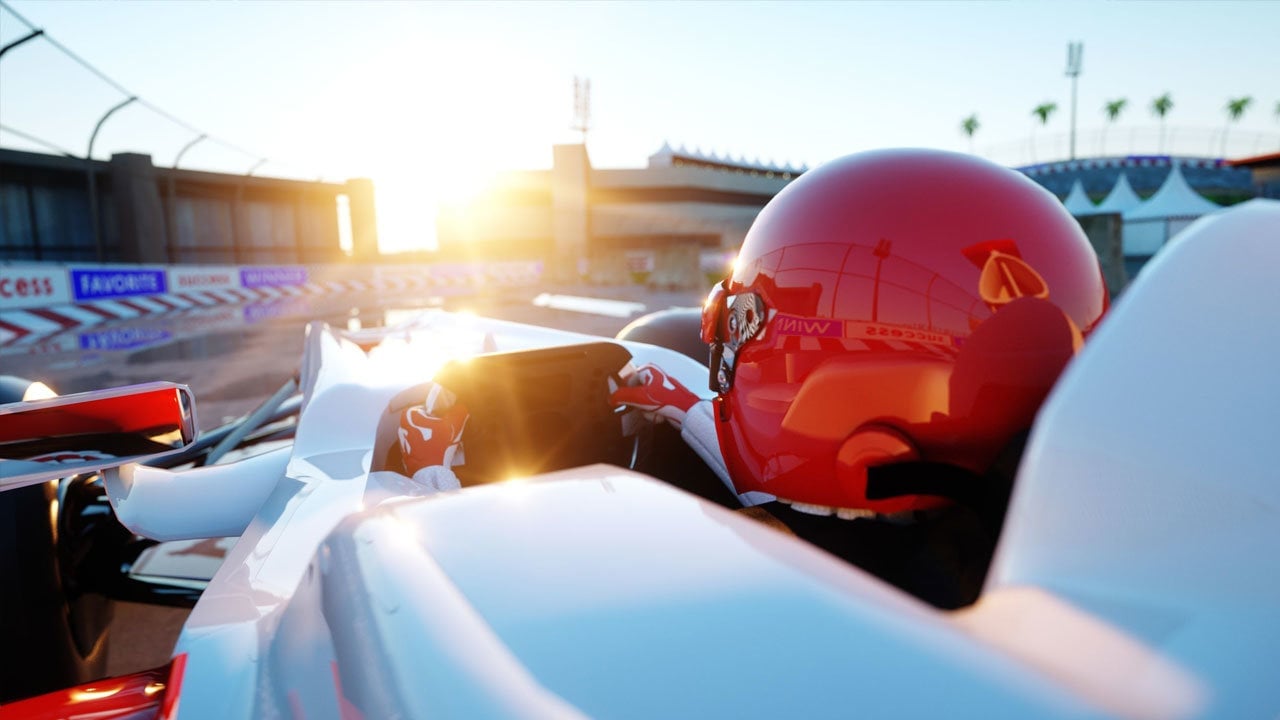
From the evolution of the cars to the richest drivers of all time, take a glimpse into how the fast and furious history of formula 1 racing all began.
If you've landed on this article, you likely know about the fast, furious, and high-class Formula One racing contest.
Commonly referenced as F1, this internationally-recognized auto racing sport is a dream to watch (and let's be honest—many youths aspire to be in that cockpit).
But how did this single-seated, open-wheel, professional sport begin, exactly? Not only that but what fun, lesser-known facts are there to be learned about this fascinating race?
Here, we discuss the origin and history of Formula 1, plus answer some urgent questions—covering topics like, "Do F1 drivers pee?" or, "Who is the richest Formula 1 driver today?" Come on; you know you've wondered!
Buckle up and keep reading.
The Fascinating History of Formula 1 Racing
The story of F1 racing goes back to Europe in the 1920-30s.
Other similar racing competitions influenced its beginnings. The professional sport finally became official in 1946 when the FIA (Fédération Internationale de l'Automobile, or, International Automobile Federation) standardized the racing rules. This was the real beginning of F1 racing and the basis for everything that followed.
Thanks to the FIA, we have the term 'Formula,' which stands for the rules drivers must follow.
The first world championship series was held four years later, in 1950, with the first Formula One World Drivers’ championship. During this time, races were conducted outside of the world championship—but as costs got too high to afford, races became limited to the annual world series. Officially, all other races were canceled after 1983.
Instead, throughout the year, drivers participate in qualifying races, called Grands Prix (or GP). Grand Prix is 'great prize' in French, a nod at the sport's origins.
Since 2015, an astounding 42 countries have taken part in these GPs! From Finland, to India, to the US, New Zealand, Italy, and beyond—this is a globally-recognized sport.
Tell Me About the Cars!
Alright, enough of the history stuff! Let's get into some juicy details—such as, how fast do Formula 1 cars go, exactly?
Formula 1 cars obviously have fantastic power. Each of them features minimal construction that allows the vehicle to accelerate from 0 to 100 MPH and back to 0 in under five seconds! Some of the fastest F1 cars have reached record-breaking speeds of 185 MPH.
Because of that, these bad boys have a high price tag. Some basic shells can cost up to $15.52 million! This includes things like the front wing, steering wheel, tires, fuel tank, and more—all of which have to be of high quality.
That's why some manufacturers, such as Mercedes and McLaren, outsource the engine (one of the most expensive components at about $8 to $10 million) to Honda, which saves on costs.
But of course, this money is quickly and easily made back with the number of viewers each race gets. Additionally, Forbes reported that the collective budget of the ten F1 teams is an astounding $2.6 billion a year. It's not cheap to keep those wheels turning!
Who Won the Inaugural Title?
Italian driver Nino Farine is the winner of the F1's first championship in 1950 and, therefore, worth an honorable mention. Unfortunately for him, another name came center-stage. It probably didn't help that Farine was known for being temperamental and one of the most well-known crashers.
Instead, when thinking of notable F1 drivers, Argentinan driver Juan Manuel Fangio deserves some accolades. In total, his driving earned him five world series titles. Some say his talents lied in winning races at the slowest possible speed.
Where's This Money Coming From?
In another Forbes report, we learn just how teams can manage to spend in the hundreds of thousands of dollars to win a championship.
This money—which in low moments has sat at $202.5 million and in the highest, $413.6 million—typically comes in one of three ways:
➀ Sponsorships
➁ Prize money (which is no small thing—it was $913 million in 2018)
➂ Team owners
Some miscellaneous money can come in from sources like drivers who pay to drive, or as we mentioned earlier, viewership (another not-so-small number).
A Fun Formula 1 Q&A
Now that we've covered the introductory details, let's answer some of the most pressing questions surrounding this exciting sport!
Who Is the Richest Formula 1 Driver?
It's safe to say these drivers pull in some sweet cash.
As of 2018, retired driver Michael Schumacher's net worth was $780 million.
Even lower earners make the big bucks. The 10th richest driver as of 2018 was retired driver Nico Rosberg at $30 million!
Who Is the Best Formula 1 Driver Today?
Today's raining champ is a name not yet mentioned in this piece. Of course, our top earners are some of the best drivers in the industry.
But the best Formula 1 driver today has to go to active driver Lewis Hamilton. He currently holds eight world championship titles, 84 race wins, and 47 of the fastest-ever laps.
Do F1 Drivers Keep Their Cars?
The answer to that question, in short, is no.
Most F1 cars turn into 'static displays,' which means everything but the bare chassis gets removed, and the shell gets used for displays at various events, like auto shows and demonstrations, at the offices of the F1 teams, or goes to live with its sponsor.
Other options include selling to private collectors, entering them into vintage racing events, or used for course practice.
Do F1 Drivers Pee?
Interesting (and understandable!) question. What's a driver to do mid-race if nature calls?
Take it from the drivers themselves, like Lewis Hamilton—they may go right in their suits if they can't hold it (he claims he hasn't). After all, stopping, or even peeing into a bottle, are out of the question when every second counts. Some drivers also wear adult diapers, but good luck getting them to admit it.
Drive Away With This Knowledge
Now you know it all—the history of Formula 1, some names of famous drivers, a small glance at the insane costs. We hope you enjoyed learning this interesting information! Hopefully, you'll get invited to an F1-themed trivia night sometime soon.
In the meantime, if you're wondering how to watch F1 races, you can live-stream all their races on Formula One's website for $79.99 a year.
For more fascinating looks into subjects like these, keep scrolling our site!
Looking for a fresh take on crash games? We explore engaging crash and tap games with entertaining themes inspired by pop culture and classic gaming.
Learn how crypto beginners can bet safely using stablecoins like USDT and USDC. Skip market volatility and explore 4 top-rated online casinos offering fast, reliable stablecoin deposits today.
Join us for a chat with Wiktoria Hanak of BF Games to understand how the provider decides which games to make and learn more about the mathematical model and bonus feature selection process.

 Casinos
 Games
Games
 Jackpots