






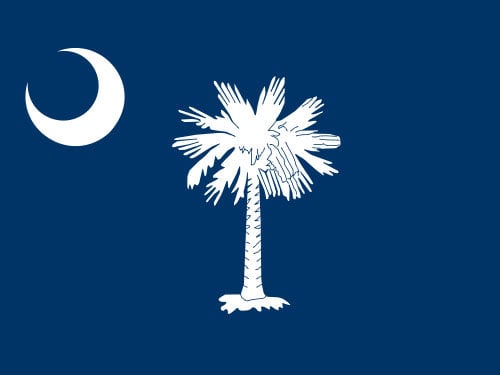
South Carolina started as a popular gambling state but later turned the tables to outlaw most forms of gambling. Today most gambling activities including online casinos are still banned in this state.
In the United States, the rules are different and each state can decide the fate of gambling in their respected areas. Where many states are warming up to gambling activities both online and offline, the state of South Carolina appears to have no interest in expanding their gambling industry.
South Carolina might have been considered a popular gambling hub back in the day but for modern-day residents, there are limited legal options. By law, only Bingo, Raffles and the State Lottery can be actively enjoyed here. There is also a single casino in the state that can operate only due to its mobility. The casino cruise docks near Myrtle Beach and never stays on land for a long time.
That being said you will find Daily Fantasy Sports, online sportsbooks and foreign operators offering their services in this state. To this day no online sportsbooks or DFS gaming operators have been prosecuted. If the lack of legal gambling options available is any indication it could be quite sometime before there any legislation is put in place to legalise and regulate online gambling in this state.
While there are very few legal gambling options available the state rakes in an estimate of $1,400,000,000 in gambling revenue annually. It should also be noted that the state derives about $400,000,000 in tax revenue from gambling activities each year. With these numbers in mind, it’s odd that South Carolina has not yet jumped at the chance of legalising more gambling options. Not only is there a clear love for gambling among residents but it could increase their annual revenue even more.
Online gambling has become a big fascination for many across the globe, unfortunately, the State of South Carolina is not interested in legalizing any forms of online gambling activities just yet. From the looks of it, this state has a long way to go in terms of gambling legislation. Starting with the legalisation of land-based casinos, sportsbooks and even poker rooms. For online and land-based gamblers alike there are not many options available in this state. Online casino gambling might soon be banned completely in the state.
South Carolina is one of those states that blossomed in the gambling industry early on. Gambling was once more popular in this state than in Nevada. It was in the 1990s when South Carolina had various gambling options available. The main reason for the wide range of gambling options available was not due to laws and regulations but rather the loopholes in their gambling laws.
Video Poker operators discovered the loopholes which resulted in many casinos opening throughout the state. In this time you could find video poker games anywhere including in gas stations, bars and even restaurants. It lasted about a decade before it was outlawed.
The South Carolina state lottery was created in 2001, merely a year after the ban of video poker games. The state lottery sells tickets to local lotto drawings as well as scratch-off instant games.
The only casino currently operating in the state is the Big M Casino which is only able to operate legally because it acts as a cruise casino. You can book a short trip on the cruise and gamble at the casino games tables without the fear of prosecution. These trips are short and sweet and seem to keep residents happy at the current time. One of the main reasons this casino cruise can operate is due to the gambling laws on boats.
The Bingo Act of 1976 permits charitable gambling activities which can be offered by any charitable organizations. The native Catawba Tribe has also been permitted to offer high stakes bingo games thanks to the Indian Gaming Regulatory Act. The tribe has tried to expand their casino operations in the state but this has failed.
Interestingly enough horse and greyhound racing activities used to take place in the state. Racing was the first form of gambling in the state of South Carolina. After a century of active racing and betting it came to an end during Wolrd War II thanks to the conservative movement.
Video Poker activities kicked off in the state in 1986 where a state gambling law was edited and attached to a must-pass budget bill. With some language removed from an anti-gambling statute, video poker machines found their way into the state. They were scattered across South Carolina and it took three years for lawmakers to realize what they had done. By this time there were 7,000 places to gamble with over 34,000 video poker machines available.
The video poker industry of the state had become a nine-figure industry. Lawmakers first tried to regulate the operation of video poker by implementing rules such as outlawing video poker on Sundays and limiting the daily winnings. Unfortunately, there was no benefit in this gambling activity for the state as they receive no tax benefits and there was no minimum age requirement. After many struggles with video poker activities, it was put to an end by a statewide referendum end June 2000.
South Carolina is considered to be the most restrictive gambling state after Utah when it comes to gambling. With this in mind, there are very few gambling options available in the state and as such, there is no state gaming commission. With no gambling industry to regulate the state does not need to employ a regulatory body.
Currently, the only forms of gambling legal in the state of South Carolina are Bingo. The South Carolina Department of Revenue (SCDOR) is in charge of licensing and regulating all nonprofit bingo games, organizations and individuals. They also oversee all manufacturers, promoters and distributors. The state’s rules and regulations for charitable bingo are established by the Bingo Act of 1976. By law, bingo games are only allowed to offer a single prize of unequal value.
The Bingo Act of 1989 amended the bingo laws to include promoter’s licences. Any nonprofit organization that wants to host a bingo game needs to obtain a licence first. And n order to do so the nonprofit organization needs to have evidence of being in the state for 3 years and active for 2 or more years. Once a license is awarded the nonprofit does not have to renew the license unless they wish to change the operation of the game or the location. Each nonprofit is only allowed one bingo license.
The promoter is the person or organization hired by the licensed nonprofit organization to operate, conduct or manage the bingo game. These promoters also need to obtain a license from the SCDOR and a license for a promoter costs about $1,000. Any promoter is allowed to have five licensed maximum.
All bingo card manufacturers and distributors are also required to carry a license to do business in the state. These licenses cost about $5,000 for manufacturers and $2,000 for distributors. The fees for these licenses are annual and must be paid to the SCDOR. All bingo players must pay an entrance fee of $3, $5 or $18 to partake in the bingo activities.
The South Carolina Lottery is run by the South Carolina Lottery Commission. The commission is a public commission that oversees all lottery games and activities. All lottery game proceeds are used to support improvements and enhancements of educational purposes and programs.
No, but it is not mentioned specifically in the laws which enable offshore gambling websites to operate illegally in the state.
As long as you play at a site that is licensed and regulated in another state it can be safe.
Yes, the South Carolina Lottery is one of the only legal gambling options available in the state.
No, horse racing used to be available in the state but there is no horse racing activity today.
No, there is no off-track betting legally available today.
No, you can only purchase lottery tickets at local retailers.
Yes, daily fantasy sports are one of the only forms of online gambling that is currently deemed ‘legal’ in the state.
Yes, the only casino in the state is the Big M Casino which operates as a Cruise Casino. There are no land-based casinos.
You have to be 18 years or older to partake in gambling activities in the state.
No, Video Poker was banned in the state in June 2000.

 Casinos
 Games
Games
 Jackpots